STEP 01
Capture
We take multi-angle images at every touchpoint — starting at bag drop, where the first set becomes the bag's reference profile and its condition record. No change to the workflow.
A tag can fail. The bag can't hide.
BagBridge identifies checked bags by appearance, inside the baggage handling system you already run. When the tag reader or tracking system comes up empty, BagBridge supplies the identity — before the bag reaches the exception queue.

The industry has data about bags. Almost none of it comes from the bag. Identity, condition, size — these are largely absent from today's baggage records.
Resolution 753 tracks handoffs, not the bag. Between reads, the system knows where a bag should be — not where it is. Transfer handoffs are where that gap costs the most: 39 percent of mishandling happens there.
Three to five percent of bags drop into manual encoding. Someone walks the belt. Seventy percent of what a delayed bag costs is operational — recovery, rerouting, delivery.
Condition, size, whether the tag is even still attached. Damage claims get paid without evidence, because there isn't any.
Tagging errors cause 4 percent of mishandling. The gaps between reads cause the rest.
Source: SITA Baggage IT Insights, 20th edition, June 2026.
We take multi-angle images at every touchpoint — starting at bag drop, where the first set becomes the bag's reference profile and its condition record. No change to the workflow.
At every checkpoint through the BHS, the bag is matched against its profile. Identity holds whether or not the tag reads.
When the ATR returns a no-read, BagBridge supplies the correct license plate to the BHS before the bag hits the exception queue. Imagery and events flow to the operator dashboard and the BagTalk API.
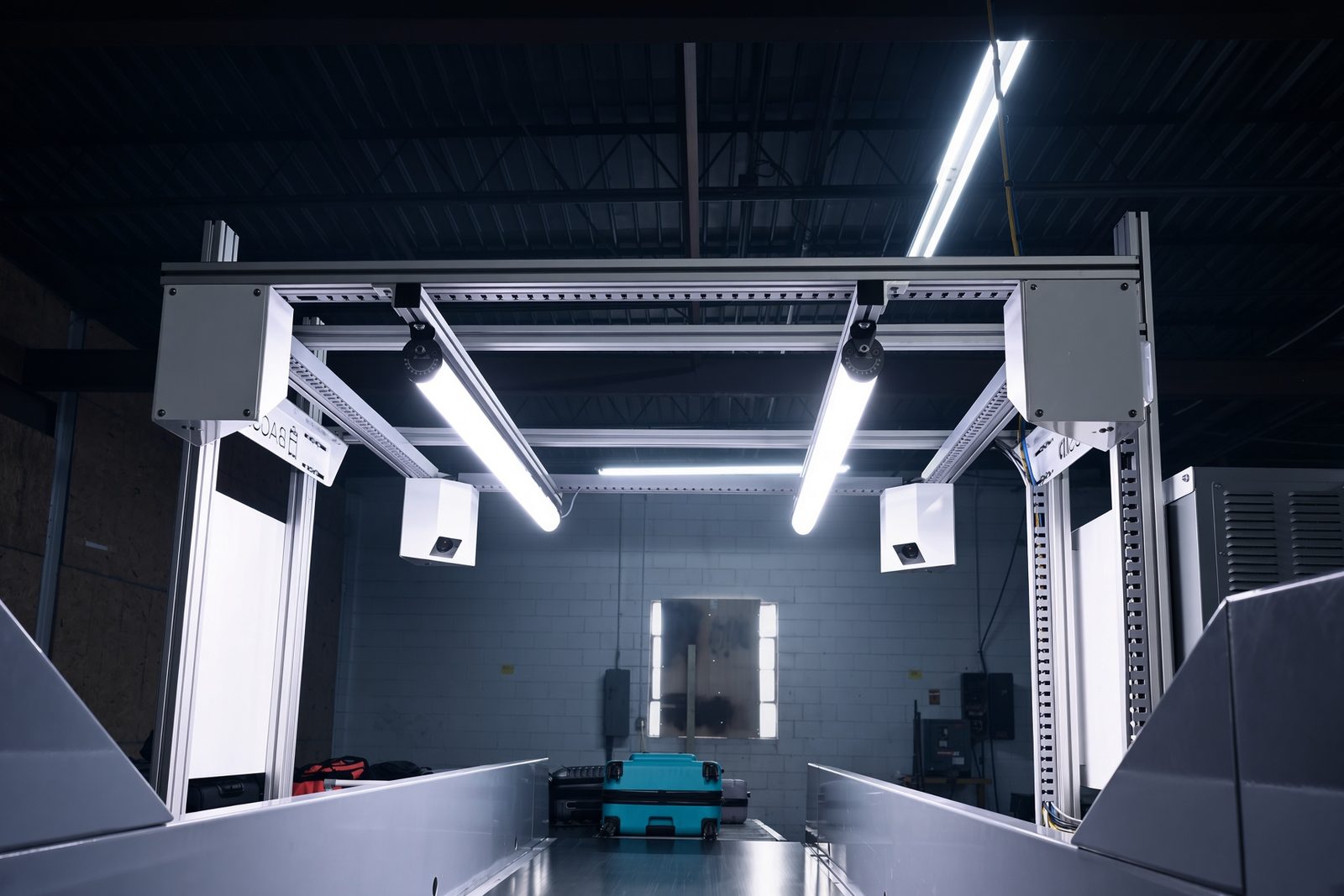
Every module runs on the imagery BagBridge already captures — no new hardware.
Visual ID through the BHS, supplementing ATR and RFID at bag drop, sorter, ramp and carousel.
Bag matching through CBIS screening, swap detection and abutted-bag separation. TSA-validated at Dallas Love Field.
Every capture doubles as an inspection — tag presence, visible damage, loose straps, wheel orientation, abutted bags, human intrusion. No new hardware.
"Far surpassed our expectations."
Allen Yuarata · YVR / Alaska Airlines
We prove the numbers on your own traffic before you commit to anything wider.